Scent Breakdown: What Does Oud Smell Like in Perfume?
Oud is treasured for its depth and centuries-long influence across global fragrance traditions. Its role in niche perfumery continues to evolve, shaping compositions with a complexity rooted in history.
The Origins of Oud and Its Journey Into Perfumery
Understanding oud begins with its origin story. Its journey into perfumery reflects centuries of cultural and aromatic significance.
Botanical & Cultural Context
Oud, also known as agarwood, develops when Aquilaria trees experience infection by the mold Phialophora, triggering a slow transformation of pale heartwood into a dark, resinous core.
As the resin matures over time, the resulting material becomes more expressive, creating layers that perfumers value for their texture and complexity.
Across Middle Eastern, South Asian, and East Asian cultures, agarwood has appeared for centuries in ritual practices, incense ceremonies, and early perfumery. Its reputation extends into realms of spirituality and healing traditions, where smoke from burning chips became a medium for reflection and storytelling.
Oud embodies craftsmanship passed down through generations, representing an aromatic heritage tied to artistry, reverence, and cultural identity.
How Oud Is Harvested and Extracted for Perfumery
Traditional distillation techniques, such as steam distillation or hydro-distillation, transform agarwood into precious oud oil.
Regional variations, whether Cambodian, Laotian, or Indian, shape distinct profiles, ranging from honeyed warmth to deep smokiness or leathery density. These nuances emerge from climate, soil, harvesting practices, and the age of the resin itself.
Artisan distillers further influence the material through fermentation, extended aging, or unique extraction methods designed to coax out specific tonal qualities.
For modern compositions, perfumers may choose between natural oud oil or contemporary synthetic accords. This decision depends on the desired aromatic direction, consistency, and regulatory guidelines, all contributing to the final expression on skin.
Oud in Perfumery
Oud offers a vast olfactive spectrum, ranging from resinous and leathery to woody, ambery, smoky, or even gently musky.
Natural oud often shifts throughout its wear, beginning with dense, textured opening elements before settling into a smoother and lingering drydown. This evolution makes oud one of perfumery’s most dynamic materials, inviting perfumers to build fragrance structures with layers that continue unfolding over time.
In many compositions, oud serves as a grounding element that enhances citrus, spice, floral, and woody ingredients. In niche perfumery, it often becomes a focal point that highlights artistic boldness and embraces unconventional beauty.
What Are the Best Scents Pairing With Oud?
Understanding oud’s characters in perfume helps illuminate why certain ingredients harmonize with its shape-shifting character.
Oud & Spices
Spices create a rich contrast that enhances oud’s warmth. Cardamom contributes aromatic freshness that threads through the resinous core, while nutmeg lends nutty roundness and depth. Pepper introduces vibrancy that sharpens the structure, and saffron adds a golden nuance that amplifies oud’s luxurious presence.
Oud & Citrus
Citrus materials brighten oud’s profile and create lift in the opening. Bergamot provides an effervescent clarity, grapefruit introduces crisp definition, and orange offers vibrant juiciness. These citrus notes accentuate the early radiance of a composition, allowing oud to emerge slowly as the fragrance transitions into its heart.
Oud & Florals
Florals soften oud, introducing elegance that creates balance. Rose contributes a velvety quality that harmonizes with oud’s darker facets, while violet lends powdery refinement. Jasmine brings a warm and rich floral character, and muguet introduces airy greenness that offsets oud’s richness.
Oud & Resins and Balsams
Amber enriches oud’s warmth, creating a soft and lasting base. Elemi, a bright, aromatic tree resin, provides a citrus-resin quality that threads brightness into the composition, while labdanum deepens the balsamic core. These resins complement oud’s natural texture, adding nuance to the final drydown.
Oud & Woods
Cedar brings smoothness and clarity, offering structure that parallels oud’s woody undertones. Fir contributes crispness, while patchouli, a rich, grounding herbaceous note from the mint family, adds earthy density that echoes oud’s root-like richness. Together, these woods reinforce continuity within the composition’s narrative.
Oud & Musk
Musk softens the final impression, bridging oud’s boldness with a smoother, more rounded finish. It enhances the lingering phases of the drydown, creating cohesion that supports the fragrance’s long-lasting character.
Common Misconceptions: Similar Scents, Very Different Stories
Understanding what oud smells like in perfume requires distinguishing it from ingredients that may appear similar but express entirely different narratives.
Woody Notes vs. Oud
Woods such as cedar, sandalwood, and fir share a comforting, woody warmth. However, these materials do not exhibit the layered richness associated with oud. Woody notes generally function as structural elements within compositions, shaping the framework rather than defining the aromatic centerpiece.
Amber vs. Oud
Amber-based fragrances lean into sweetness, warmth, and balsamic glow. Oud, while capable of pairing beautifully with amber, presents a darker and more textured profile that is often less sweet. Amber supports Oud's character, offering roundness without attempting to replicate its complexity.
Smoke Notes vs. Oud
Smoky accords may derive from materials such as guaiac wood, cade, or incense resins. While oud can contain smoky nuances, its aromatic trajectory remains inherently multidimensional. Smoke notes often follow a linear path, whereas oud evolves continuously, expanding and shifting through each stage of wear.
Summary Table
| Ingredient / Accord | Primary Character | How It Differs From Oud | Role in Perfumery |
|---|---|---|---|
| Woods (cedar, sandalwood) | Smooth, dry, resinous | Less complex; lacks fermented depth | Structure and warmth |
| Amber | Sweet, warm, balsamic | Sweeter and softer than oud | Adds glow and roundness |
| Smoke notes | Charred, incense-like | More linear than oud | Adds atmosphere and intensity |
Key Takeaways
Oud remains one of perfumery’s most expressive natural materials, treasured for its resinous depth and intricate aromatic narrative. Its complementary pairings, spices, florals, citrus, woods, and amber, allow perfumers to craft expansive, multi-layered compositions that shift gracefully through time.
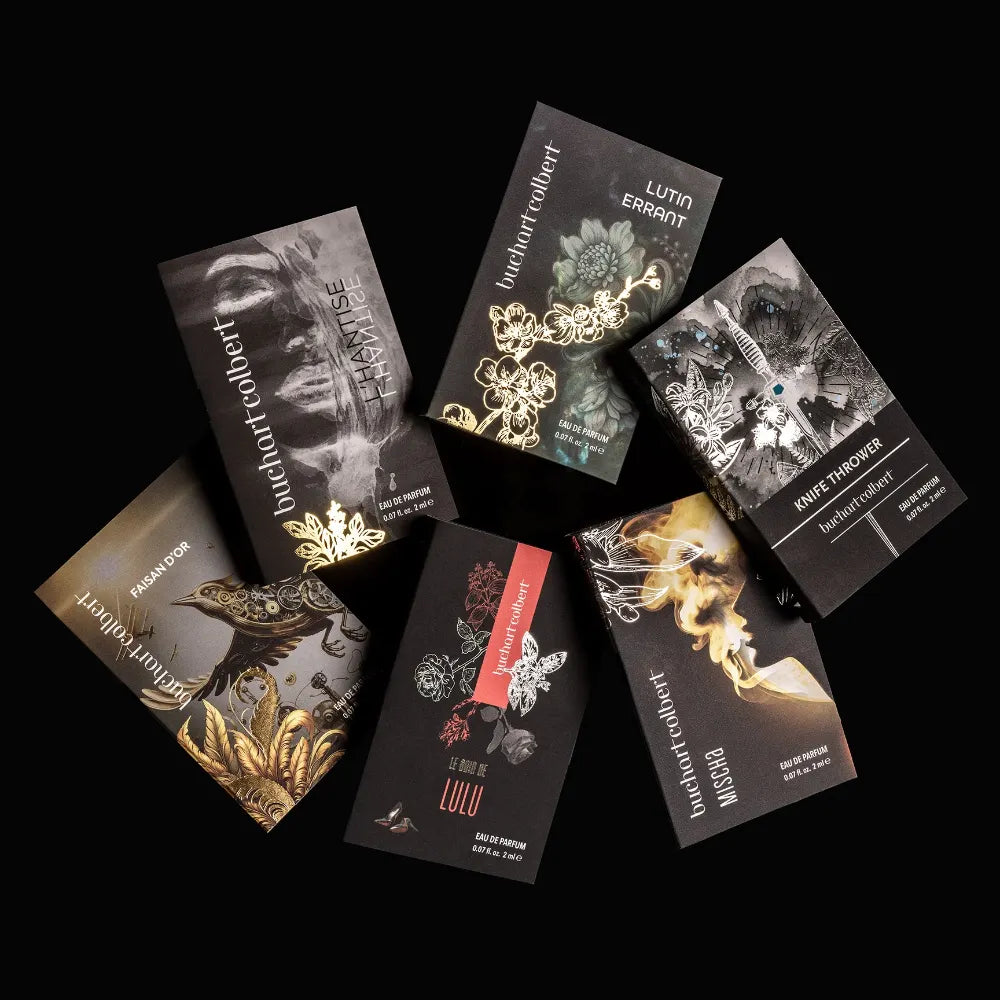
For perfume lovers seeking a deeper exploration, richly layered Eau de Parfum compositions can be experienced through Buchart Colbert’s Sample Discovery Set.
FAQs
Understanding what oud smells like in perfume often leads to further questions about its use and significance.
1. Does oud always have a strong character?
Natural oud often carries bold facets, but its intensity depends on region, extraction, and age. Modern compositions may feature softer or more refined interpretations.
2. How long does oud last in a perfume?
Oud is known for excellent longevity due to its dense resin profile. Even small amounts can extend a composition’s presence across many hours.
3. Why does oud vary so widely across fragrances?
Regional origins, distillation choices, and aging techniques contribute to significant variation. Each batch may express a different aromatic signature.
4. Are synthetic oud accords common?
Many perfumers use synthetic accords to capture specific aspects of oud while ensuring stability or regulatory compliance. These accords offer greater consistency across batches.
5. Is oud used in unisex fragrances?
Yes. Its complexity allows perfumers to shape it for any direction, making it an excellent fit for unisex fragrance design in niche perfumery.