Chypre Perfume Explained: From Cyprus to Modern Niche Scents
This structure creates a layered experience that has shaped classical and niche perfumery for over a century. Its reputation for elegance endures, and at Buchart Colbert, we appreciate how this balance inspires our fragrance philosophy.
The Origin of Chypre in Perfumery
Chypre perfume began as a fragrant idea shaped by Mediterranean landscapes and cultural exchange.
How Cyprus Inspired a Fragrance Revolution
The word ‘chypre’ (pronounced “sheep-ruh”) originates from the French word for Cyprus, referencing the island’s long history of aromatic materials.
Early forms of chypre-like compositions are notably oakmoss, a lichen found in European forests, and labdanum, the resin of the Cistus ladaniferus or rock rose, harvested across Mediterranean hillsides.
Long before the modern chypre structure developed, labdanum appeared in early ‘eau de Chypre’ recipes of the 18th century, offering a resinous, balsamic character that shaped the earliest interpretations.
As European perfumery evolved, these botanical materials became foundational in the development of chypre-style compositions that later defined a major fragrance family.
The Structure of a Classic Chypre Accord
Modern recognition of the chypre family is often attributed to Chypre de Coty (1917), crafted by François Coty. This landmark Eaux de Parfum established the canonical architecture: an uplifting citrus top, typically bergamot, leading to a heart built around labdanum and sometimes florals, followed by a grounded base of oakmoss, patchouli, and occasionally musk.
Coty refined the interplay of these contrasting elements, tempering the assertiveness of oakmoss with luminous citrus and warm resins. Regulations limiting the use of oakmoss later reshaped this family, prompting perfumers to use adjusted extracts and modern substitutes to maintain the structure’s tension.
Today, contemporary creators adapt the classic formula with innovative materials that preserve its recognizable profile while offering new nuance.
How to Experience Chypre in Perfume
Chypre compositions often unfold in distinct stages, rewarding attentive exploration. Their evolution typically begins with brightness, transitions into a resinous heart, and settles into a mossy, woody base that lingers for hours.
Because of this complexity, testing a chypre works best on skin rather than solely on a blotter, as its transformation and dry-down are essential to appreciating its structure. Observing the shift from citrus to labdanum and oakmoss or patchouli reveals its depth.
For perfume lovers who enjoy layering, chypres pair well with lighter accords, although moderation is recommended to preserve the integrity of the structure.
What Are the Best Scent Pairings with Chypre?
Chypre fragrances pair well with certain categories that enhance their natural facets. These combinations allow wearers to highlight specific elements or soften others.
Floral
Pairing chypre with delicate florals such as rose or jasmine can elevate the fragrance’s heart and highlight its sophisticated evolution from citrus to resin and moss.
Fresh or Citrus Notes
Layering with gentle citrus or fresh ozonic accents can amplify the chypre’s opening brightness, creating an airy introduction without compromising the deeper base.
Woody & Smokey Accords
Combining chypre with cedar, sandalwood, or subtle smoky tones enhances its grounding qualities and reinforces the structural tension between its luminous top and earthy base.
Musk
Adding refined musk or velvety leathery nuances can expand the richness of a chypre’s dry-down, bringing smoothness and warmth to its mossy undertone.
Common Misconceptions: Similar Scents, Very Different Stories
Chypre perfume is sometimes misunderstood due to its long history and complex architecture.
Misconception 1: Chypre is just old-fashioned ‘forest scent’.
Chypre compositions are often mislabeled as vintage or strictly moss-driven, yet modern versions span a wide spectrum of expressions.
Many use contemporary materials, including refined oakmoss substitutes, to balance freshness with depth. Newer interpretations incorporate fruity or floral accents, demonstrating the category’s versatility.
Misconception 2: Chypre always smells like damp moss or dirt.
While oakmoss contributes a defining aspect to the base, the chypre structure prevents it from feeling overwhelming.
The contrast of citrus, resin, and moss creates a subtle interplay often described as elegant and textured. Well-blended labdanum and patchouli contribute warmth and richness without heaviness.
Misconception 3: Chypre fragrances are niche and not wearable daily.
Though historically aligned with classical perfumery, chypres today appear in soft, fresh, and unisex formats that are easy to wear.
Reformulations and modern compositions emphasize balance and accessibility. Many contemporary perfumers continue to craft chypres that feel timeless yet adaptable to everyday life.
Summary Table
| Aspect | Chypre (Classic & Modern) |
|---|---|
| Structure | Citrus top → Resin/floral heart → Mossy woody base |
| Evolution | Incorporates modern materials and interpretations |
| Sub-types | Floral, fruity, woody, leather-inflected, and more |
| Wearability | Can be refined, fresh, or bold; many modern chypres are unisex and wearable everyday |
How Chypre Connects to Our Buchart Colbert Fragrances
At Buchart Colbert, we value layered compositions, musical influences, and narratives that evolve like a well-crafted score. This philosophy naturally aligns with the structure of the chypre family, and certain fragrances in our collection carry echoes of its characteristic interplay.
Mischa carries a heart of saffron and resin supported by a base featuring moss, evoking a chypre-like sophistication anchored by contrast between citrus brightness and grounding depth. Although not a traditional chypre, its structural tension reflects the family’s influence.
Le Bain de Lulu, or Lulu’s Bath, features a powdery, moss-like dry-down enriched by a spicy-floral heart. The connection between its citrus opening and earthy base forms a gentle parallel to chypre’s architecture.
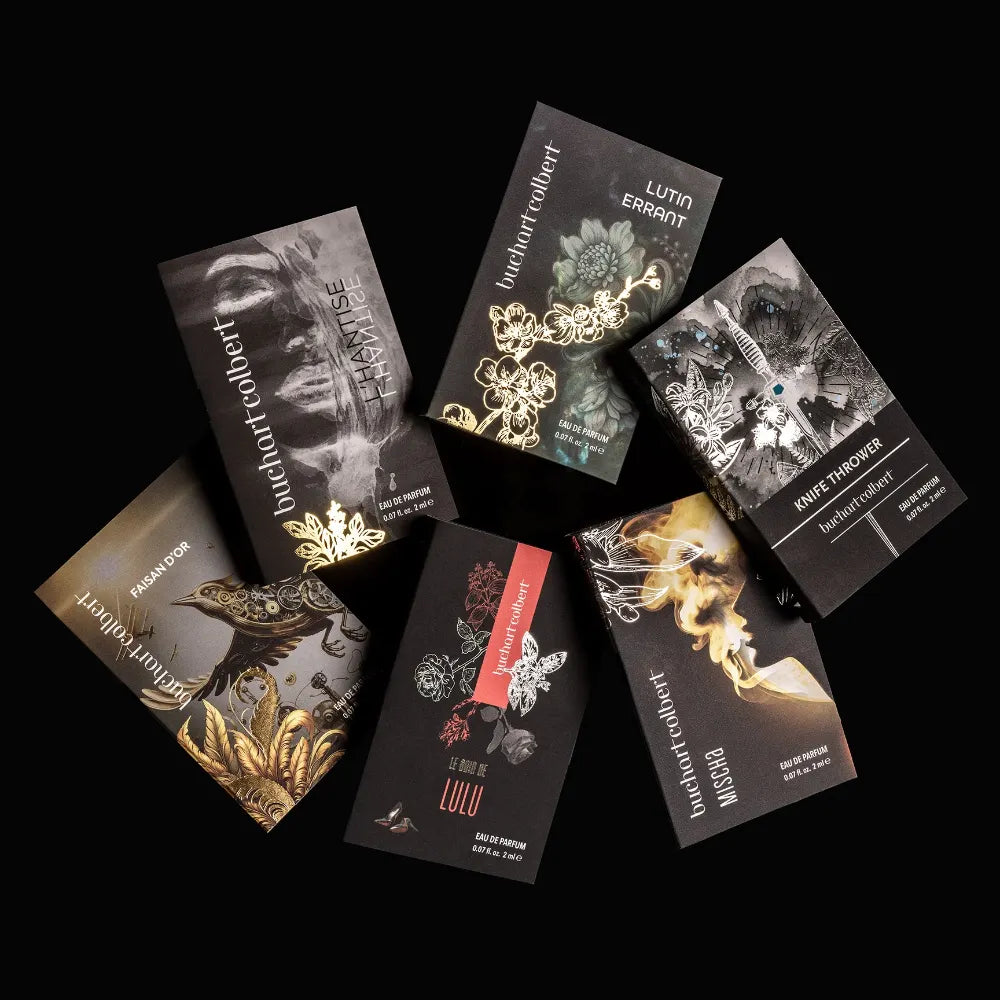
Our Sample Discovery Set offers a way to explore fragrances in which chypre elements appear subtly, particularly through Mischa and Le Bain de Lulu, while also discovering the broader diversity of our collection.
Key Takeaways
Chypre perfume is defined by its balance of citrus, resin, and moss. Modern interpretations remain versatile and are not confined to vintage styles.
At Buchart Colbert, we appreciate how chypre’s layered complexity resonates with our approach to scent composition, especially in Mischa and Le Bain de Lulu.
Our Sample Discovery Set provides an accessible introduction to exploring how chypre-like depth can appear across our collection.
FAQs
Chypre perfume offers a rich history and a recognizable balance that continues to inspire niche and indie perfumery.
1. Are fruity chypres considered traditional?
Fruity chypres are viewed as a contemporary sub-type. They maintain the classic structure while introducing fruit notes for brightness and contrast.
2. Can someone new to niche perfumery enjoy chypre?
Chypre is a strong introduction to structured, layered compositions. Its clear architecture helps new perfume enthusiasts understand how fragrances develop over time.
3. Do all chypres contain bergamot?
Bergamot is a traditional component, but some modern versions use alternative citrus notes. The overall contrast is more important than the specific ingredient.
4. Is chypre perfume suitable for warm weather?
Many modern chypres offer lighter interpretations that work well in warm seasons. Their citrus openings can feel refreshing while the base remains refined.